The Return Of 1970s Design In Modern Homes
July 07, 2026 | FW Decor | By Taryn Williamson
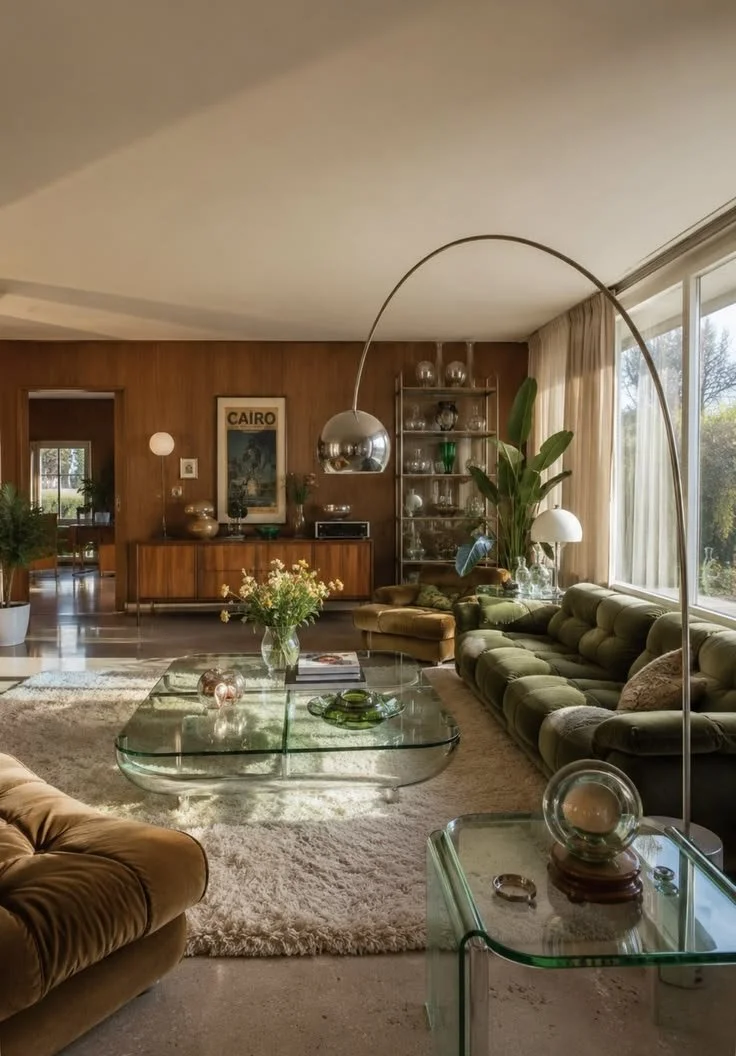
Design has never really moved in straight lines. It loops, returns, reinvents itself; and right now, it’s circling back to one of its most expressive decades. The 1970s, once associated with earthy excess and unapologetic warmth, are quietly re-entering contemporary interiors. Not as an imitation, but as an influence.
For years, modern homes were ruled by restraint. White walls, pale palettes, sharp edges, and an almost clinical sense of order defined what was considered “tasteful.” Minimalism had its moment, and in many ways, still does. But, something about it began to feel emotionally distant. Beautiful, yes. But lived-in? Not always.
What’s shifting now is intention. Homes are no longer being designed just to look composed, they’re being designed to feel something. And the 1970s understood the feeling.
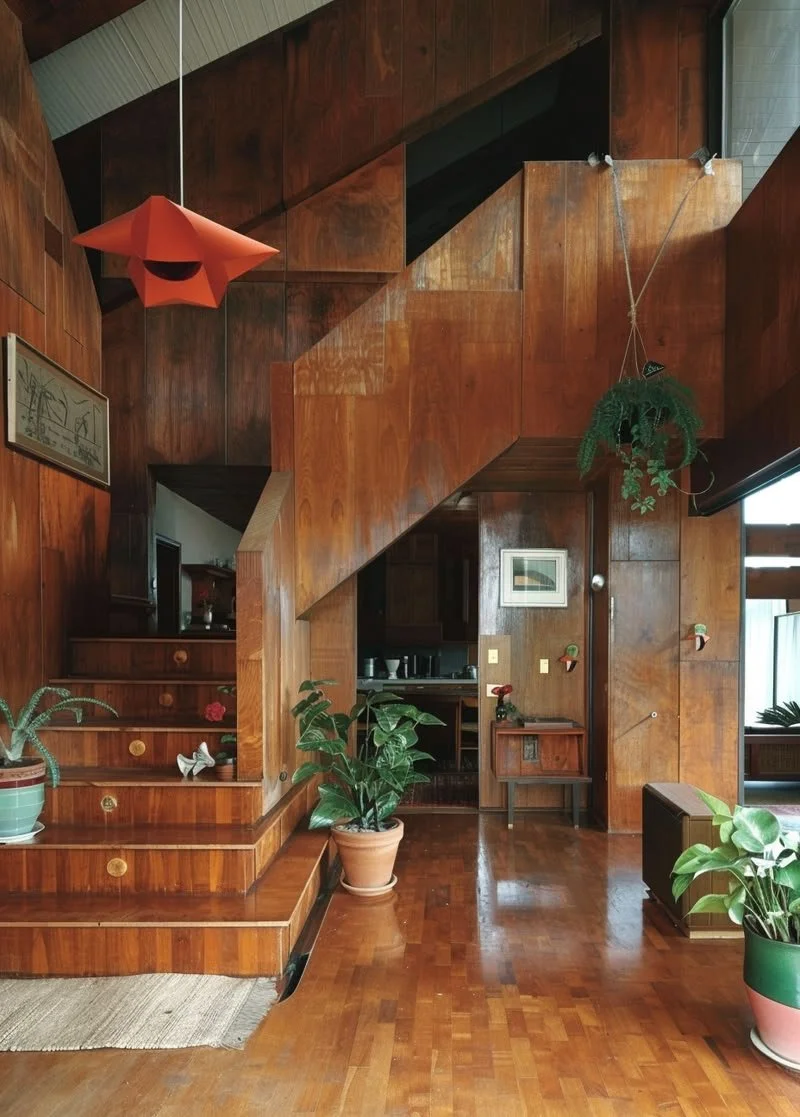
This revival isn’t about recreating shag carpets and heavy drapery exactly as they were. It’s about reclaiming the decade’s atmosphere: warmth without hesitation, comfort without apology, and spaces that feel deeply human. Think walnut that actually looks like wood. Stone that carries weight. Sofas that curve instead of angle away. Rooms that don’t just function, they gather.
There’s a reason this era keeps resurfacing. After years of visual silence in interiors, people are responding to texture again. To colour. To depth. Earthy tones like burnt orange, olive, tobacco brown, and honeyed neutrals are reappearing, not as accents, but as foundations. Materials once considered “retro” now feel grounding, even luxurious.
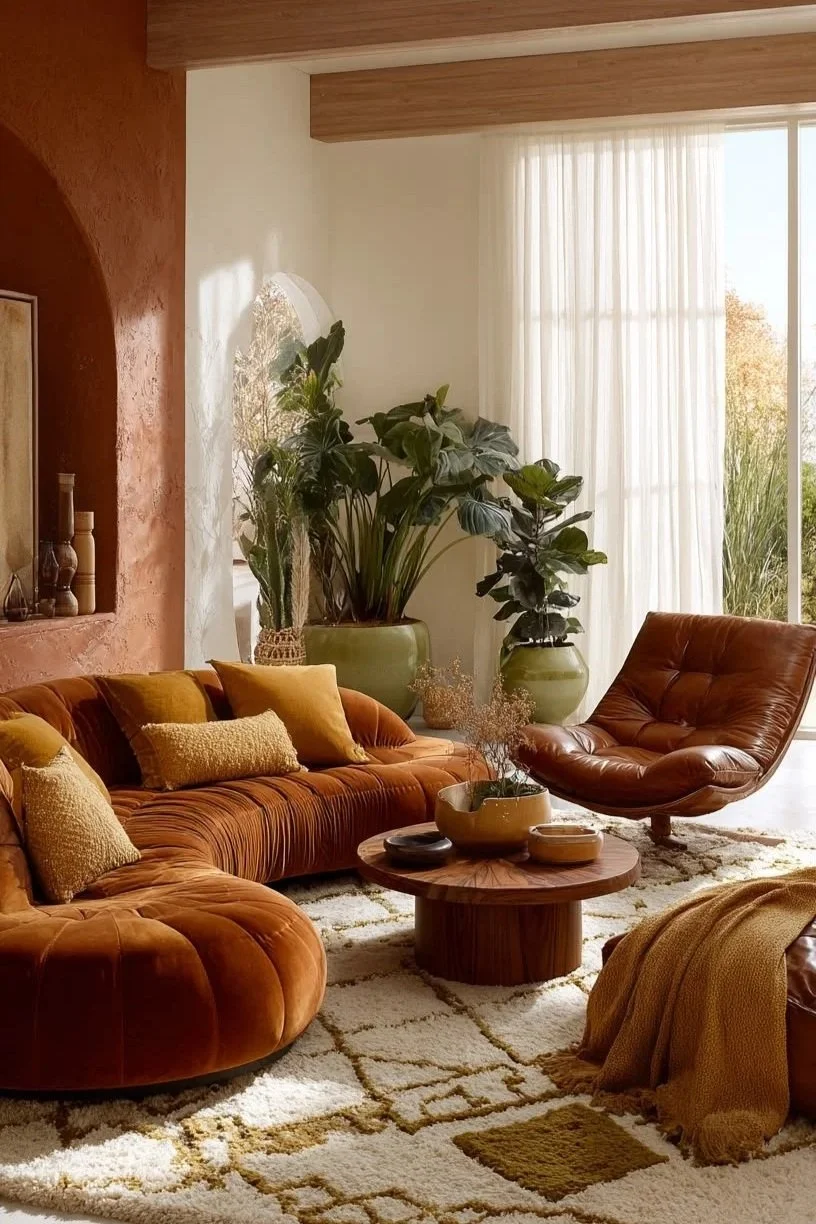
But what makes this return interesting is not nostalgia, it’s translation.
Today’s 1970s influence is edited, refined, and far more intentional. Curves are softer. Spaces are lighter. Materials are elevated. A travertine table sits beside a sculptural contemporary chair. Velvet is used sparingly, but with purpose. Walnut is paired with steel or glass, balancing warmth with clarity. Nothing feels costume-like. Everything feels considered.
This is where the shift becomes cultural as much as visual.
Luxury today is no longer defined by perfection or restraint. It’s defined by personality. The most compelling interiors aren’t the most minimal, they’re the most expressive. Spaces that feel collected rather than staged. Lived-in rather than photographed into submission.
There’s also a deeper motivation beneath the aesthetic return: longevity. People are choosing materials that age well, furniture that carries weight, and design decisions that won’t expire in a season. The 1970s, in their original form, weren’t built for disposability; and that mindset feels increasingly relevant again.
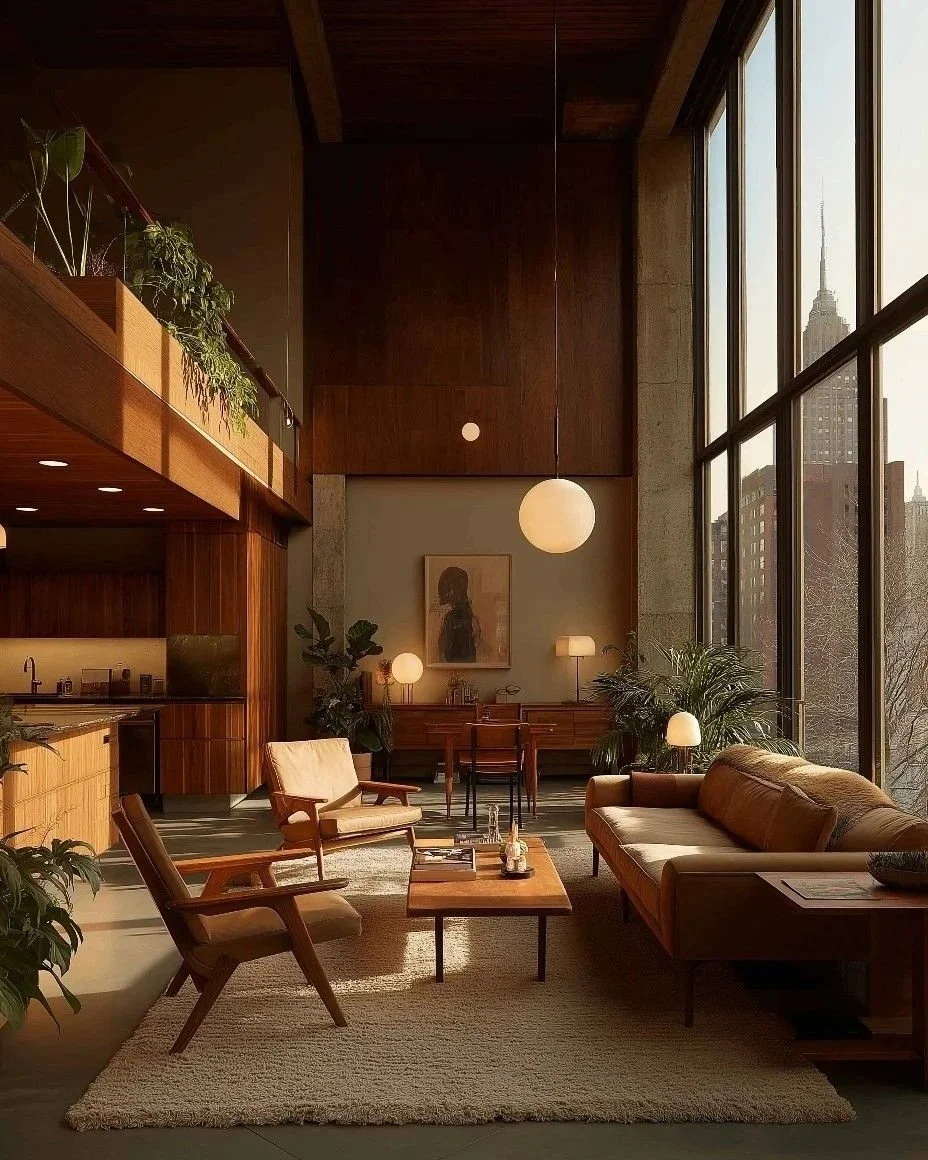
https://ca.pinterest.com/pin/1126181450607481712/
Ultimately, this revival isn’t about looking back. It’s about rebalancing what modern interiors lost along the way.
Because while minimalism taught us restraint, the 1970s remind us of something else entirely: that homes are meant to hold us. Not just visually, but emotionally.
And in that sense, the decade never really left. It was just waiting for us to want more again.